Everyone's Still Quoting It. You Just Don't Care Anymore.
Somewhere between season three and season four, something shifted. You stopped caring. Not dramatically — there was no moment of rage-quitting, no disappointed tweet, no public declaration. You just... drifted. The show that once felt like must-watch television became background noise, and eventually, you stopped pressing play altogether.
That would be fine, except your entire friend group didn't get the memo.
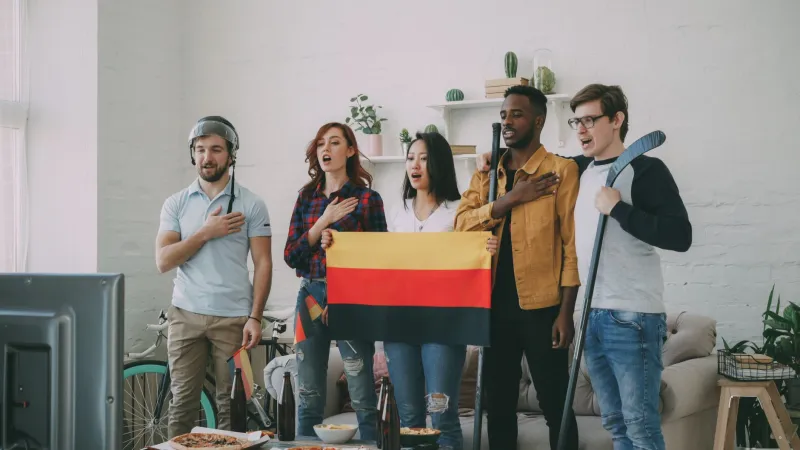
Now every group chat has a reference you half-understand. Every dinner conversation circles back to a plot twist you zoned out on. And every time someone says "okay but did you SEE the finale", you smile and nod in a way that's technically not lying but definitely isn't the truth.
Welcome to the parasocial breakup nobody talks about — the one that isn't between you and a creator, but between you and the cultural moment your people are still living inside.
Pop Culture Is Social Currency Now
It's worth being honest about what's actually happening here. Shared media consumption has always been a bonding mechanism — water cooler talk didn't become a cliché for nothing. But something about the streaming era turbocharged it. When a show drops all at once and everyone watches it in the same two-week window, it becomes less of a piece of entertainment and more of a shared experience. A password. A handshake.
Friendships, especially adult ones, run on these shared touchstones more than we admit. When you're no longer bumping into people at school or work every day, the question "have you watched..." does a lot of relational heavy lifting. It's a way of saying: we still have things in common, we're still in sync, we're still us.
So when you quietly opt out of the thing everyone's still obsessed with, it doesn't just mean you have more free time on Thursday nights. It means you've voluntarily stepped outside a conversation that's functioning as social glue. And that's where the friction starts.
The Guilt Is Real, Even If It Shouldn't Be
Here's the thing nobody tells you: falling out of love with a show your friends adore comes with a weird, disproportionate guilt. Like you've let someone down. Like you owe the group chat an explanation that you don't actually have.
Because what do you even say? "I just got bored" feels dismissive. "I don't think it's that good anymore" sounds like a declaration of war. And "I've been meaning to catch up" is the white lie you've been telling for six months, buying yourself time you're never actually going to spend.
Some people go full method — they'll skim recaps, absorb enough plot details to fake their way through conversations, perform enthusiasm they don't feel. It works, mostly. But it's exhausting. And there's something quietly sad about pretending to love something just to stay legible to the people around you.
The Awkward Explanations Nobody Wants to Have
If you do decide to come clean — "honestly, I kind of stopped watching after season two" — the reactions tend to fall into a few recognizable categories.
There's the Evangelist, who takes your disengagement as a personal challenge and immediately launches into a highlight reel of everything you missed, as if the right three minutes of plot summary will reignite your passion. There's the Wounded Fan, who seems genuinely hurt, like your lack of interest is a referendum on their taste. And then there's the Casually Unbothered Friend who says "yeah, I get it" and moves on, and you want to hug them.
What makes these moments awkward isn't really about the show. It's about the small, unspoken negotiation happening underneath: are we still the same kind of people? Pop culture alignment, it turns out, is one of the ways we quietly take stock of our relationships. When it breaks, even over something as low-stakes as a Netflix series, it surfaces questions that run a lot deeper.
The Isolation That Sneaks Up on You
It's rarely one show. That's the part worth sitting with.
When you fall out of step with one shared obsession, you start noticing all the others you've been quietly coasting through. The franchise sequel you watched out of obligation. The reality show you never actually found funny but laughed along with anyway. The podcast everyone swears changed their life that you made it through approximately one and a half episodes of.
And suddenly you're aware of this low-grade cultural loneliness — not the dramatic kind, but the kind that settles in when you realize the version of you that exists in your friend group is slightly fictional. A curated self who's more plugged in, more enthusiastic, more aligned than you actually are.
That's worth naming, even if it's uncomfortable. Because the alternative — indefinitely performing investment you don't feel — is its own kind of slow erosion.
So What Do You Actually Do With This?
Honestly? Probably nothing dramatic. You don't need to announce your disengagement or turn it into a whole thing. But there's something to be said for letting yourself off the hook a little.
You're allowed to have outgrown a show. You're allowed to find that a franchise you once loved no longer does anything for you. Taste shifts. Priorities shift. The things that felt electrifying at 24 don't always land the same way at 31. That's not a character flaw — it's just time passing.
What's worth being more intentional about is the social layer. If a friendship is built primarily on shared media consumption, it might be worth asking what else is holding it together. And if the answer is a lot, then one divergent TV opinion isn't going to break anything. The group chat will survive you not watching the finale.
But if you've been using pop culture alignment as a proxy for genuine connection — if "we like the same shows" has been doing the work that "we actually talk about real things" should be doing — then maybe your quiet exit from the fandom is pointing at something worth paying attention to.
You Don't Have to Keep Watching
There's a version of this that ends with a tidy takeaway: find your people, be honest, blah blah. But the real thing is simpler and a little less satisfying.
Sometimes you just don't care about the show anymore. And that's okay. The social cost is real but manageable. The friendships that matter will recalibrate. And somewhere out there, there's something new you're genuinely excited about — something that hasn't become homework yet, something that still feels like yours.
Hold onto that. That's the whole point of any of it.