The Friends We Never Met: How Online Creators Became Our Closest Companions
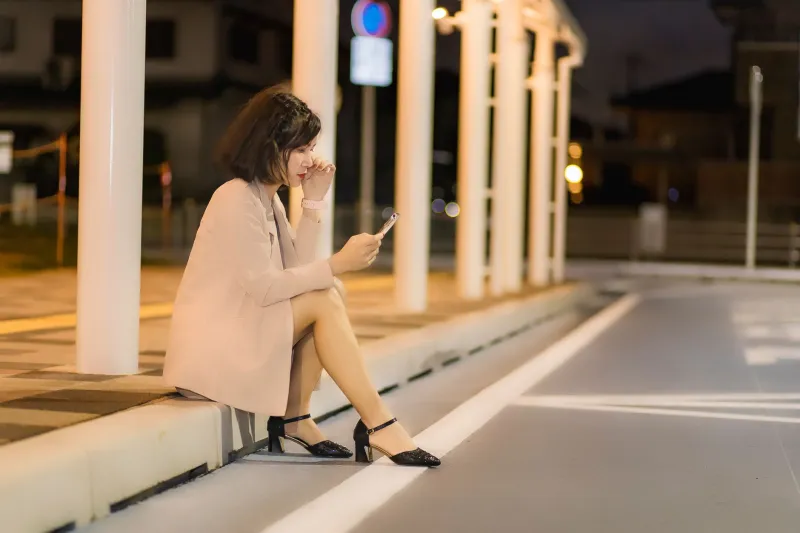
She knows his coffee order. She knows he's going through something with his mom right now. She knows he's been trying to cut back on sugar, that he hates the beach but loves the idea of the beach, that he cried during a certain episode of a show she also cried during. She's listened to him talk, uninterrupted, for hundreds of hours.
He has no idea she exists.
This is parasocial friendship in 2025 — not a fringe phenomenon, not a symptom of dysfunction, but a defining feature of how a growing number of Americans, particularly younger ones, experience emotional intimacy and community. And while the term "parasocial" has started creeping into everyday vocabulary, the full weight of what's happening hasn't quite landed yet.
We are, in very real ways, outsourcing our emotional lives to people who will never know our names.
When the Algorithm Becomes Your Social Life
It helps to understand how we got here. For most of human history, community was geographically determined. You knew your neighbors. You had a church, a diner, a block. Belonging was built into the physical structure of daily life.
Then came the internet, smartphones, remote work, the pandemic, and a decade of declining civic participation. The architecture of American social life crumbled in slow motion, and into that vacuum rushed content — an endless, personalized stream of voices, faces, and personalities, available at any hour, never asking anything of you in return.
For a lot of people, especially those who moved to new cities, struggled socially, or found traditional relationship-building difficult, these parasocial connections didn't feel like a consolation prize. They felt like the real thing.
"The brain doesn't distinguish as cleanly between real and parasocial relationships as we'd like to think," explains Dr. Yolanda Reyes, a clinical psychologist in Los Angeles who works extensively with young adults navigating digital life. "When you spend hours with someone's voice in your ears, when they share vulnerabilities, when they react to things the way you would — your nervous system responds to that as connection. The emotional experience is genuine, even if the relationship is asymmetrical."
The Creator Who Knows You Better Than You Know Yourself
Part of what makes modern parasocial bonds so potent is the intimacy of the format. A podcast host speaking directly into your earbuds on your morning commute is, neurologically speaking, whispering in your ear. A YouTuber doing a casual "day in my life" video has invited you into their kitchen, their car, their insecurities. An Instagram creator sharing a 3 a.m. voice note about anxiety is confiding in you — or performing confiding, which the brain processes similarly.
Creators have also gotten extraordinarily good at manufacturing closeness. The parasocial relationship is, in many ways, the product. "I love you guys" is said with apparent sincerity by people who have never met the millions they're saying it to. Merch drops, Discord servers, Patreon tiers, and comment replies all create the architecture of a reciprocal relationship — the illusion of a friendship that flows both ways.
For audiences who are lonely, isolated, or simply more comfortable with mediated connection, this architecture can become a primary social world.
Younger Audiences Are Hit Hardest
Gen Z grew up with this. They were handed smartphones in middle school, socialized during a pandemic, and came of age in a media environment built around creator personalities rather than institutional stars. For many of them, the distinction between a "real" friend and a creator they've followed for years doesn't feel as sharp as older generations might assume.
A 2023 Pew Research study found that 57% of teens reported feeling a strong personal connection to at least one YouTuber or content creator. A separate survey by Deloitte found that Gen Z consumers were significantly more likely than millennials or Gen X to describe influencers as "like friends" rather than celebrities.
This isn't pathological in isolation. Parasocial relationships have existed as long as mass media — people cried when Elvis died, felt like they knew Johnny Carson. But the scale, the intimacy of the format, and the degree to which these connections are now filling gaps left by declining real-world community — that's new.
"What concerns me isn't that young people have parasocial bonds," says Dr. Reyes. "It's when those bonds are doing the emotional heavy lifting that real relationships used to do. If your main source of feeling understood is a creator who doesn't know you exist, that's a signal worth paying attention to."
The Real-World Consequences Nobody's Discussing
Here's where it gets complicated. Parasocial friendships aren't just emotionally real — they have tangible effects on behavior, worldview, and mental health.
On the positive side, they can reduce loneliness, provide a sense of belonging, and expose people to perspectives and communities they'd never encounter otherwise. Fan communities built around shared love of a creator can generate genuine real-world friendships. The connection, even when asymmetrical, can be a bridge to something more reciprocal.
But the shadow side is significant. When a creator you've emotionally invested in says something that feels like a betrayal — a controversial opinion, a scandal, a pivot in their content — the grief is real and often disproportionate. The parasocial bond doesn't come with the resilience of a real friendship. There's no shared history to buffer the disappointment, no conversation to be had, no repair.
There's also the substitution problem. Time and emotional energy are finite. Every hour spent consuming creator content is an hour not spent building reciprocal relationships. For people already struggling socially, the frictionless comfort of parasocial connection can quietly crowd out the messier, harder work of real intimacy.
What We're Actually Searching For
Strip it all back and what you find is something achingly simple: people want to feel known. They want to feel like they belong somewhere, like someone out there sees the world the way they do.
The fact that so many Americans are finding that in a podcast or a YouTube channel isn't an indictment of those people. It's an indictment of how thoroughly we've dismantled the communal structures that used to provide it for free, just by virtue of existing.
The parasocial boom is, at its core, a loneliness story. And until we start taking loneliness as seriously as we take other public health crises — until we rebuild the third places, the civic institutions, the neighborhood ties that used to anchor people — we should probably stop being surprised that millions of us are turning to strangers on the internet to feel a little less alone.
In the meantime, maybe check in on someone you actually know. Text them. Make plans. Be a little awkward about it. The creator you love would probably tell you to do the same — and they'd mean it, even if they'd never know you took the advice.