Nobody Likes the Same Thing Anymore — And the Algorithm Is Why

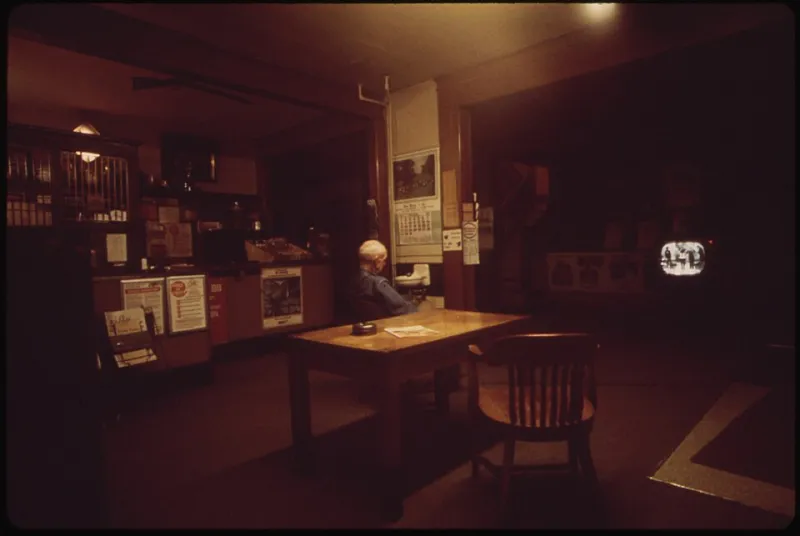
Photo: Manaku, CC0, via Wikimedia Commons
Remember when you could walk into work on a Monday morning and assume — safely, reasonably — that at least three of your coworkers had watched the same thing you did over the weekend? Not because you coordinated. Not because there was a group chat. Just because there were only so many channels, only so many options, and culture moved in big, shared waves that swept everyone up together.
That era is gone. And while a lot of ink has been spilled mourning the monoculture, we don't talk enough about what actually replaced it: a hyper-personalized content bubble so precisely calibrated to your individual taste that it has quietly made you a stranger to the people sitting next to you.
The Recommendation Engine Did Its Job Too Well
Spotify, Netflix, TikTok, YouTube — every major platform runs on the same basic promise. Feed us your behavior, your clicks, your pauses, your skips, and we'll serve you something you'll love even more than the last thing. It sounds like a gift. In a lot of ways, it is. The era of scrolling through cable with nothing to watch is genuinely over for anyone with a streaming subscription and a decent internet connection.
But here's the catch: the system optimizes for your engagement, not shared engagement. It doesn't care whether your recommendation overlaps with your roommate's, your best friend's, or your partner's. It cares about keeping you on the platform. And the more precisely it locks in on your preferences, the more it diverges from everyone else's.
This isn't a bug. It's the product working exactly as intended.
When 'You Should Watch This' Stopped Meaning Anything
Ask anyone in their twenties or thirties about the last time a friend's recommendation actually landed. Really landed — where you watched or listened to something they suggested and came back buzzing, ready to talk about it for an hour. For most people, that experience is becoming rarer.
It's not that people have stopped recommending things. If anything, we recommend more than ever. Every conversation is full of have you seen, you have to listen to, oh my god this show. But the hit rate has cratered. Because the things your friends love were served to them by an engine that has been studying their specific behavioral fingerprint for years. The overlap between your fingerprint and theirs might be smaller than either of you realizes.
The result is a weird kind of cultural loneliness. You're consuming more content than any generation in human history, and somehow it feels harder than ever to find someone who gets exactly what you're into.
Organic Discovery Is Quietly Dying
There's another loss that doesn't get enough attention: the death of the happy accident. The song that came on at a party and stopped you mid-conversation. The movie you only watched because it was on after something else. The book you picked up because the cover caught your eye at an airport bookstore.
Algorithms are aggressively bad at replicating that experience, even when they try to simulate it with features like Spotify's Discover Weekly or Netflix's "Something Different" rows. Because those recommendations are still downstream of your data. They're not truly random. They're statistically adjacent to what you already like, which means they rarely surprise you in the way that actually changes you.
Organic discovery — the kind that happens in the wild, outside a platform's walled garden — required a certain amount of inefficiency. You had to wade through things that weren't for you to stumble onto things that were. That friction was the point. It created texture in your taste, exposed you to things you wouldn't have chosen, and — crucially — created the same accidental collisions in other people's lives. That's how shared culture happened. Not by design, but by overlap.
We're Not All Watching the Same Show Anymore
The last few years have produced what you might call "island hits" — pieces of media that are absolutely massive to one specific audience and completely invisible to another. A Netflix show might get 80 million views in its first month and still produce zero watercooler moments at your office, because those 80 million viewers were all served it based on shared algorithmic profiles, not shared social circles.
Compare that to the era of Friends, Seinfeld, or even early Game of Thrones. Those shows became cultural shorthand because they were unavoidable. You didn't have to be a fan to know the references. The culture absorbed them whether you opted in or not. Today's hits don't work that way. They live and die inside their audience bubble, and if you're not in that bubble, you might never know they existed.
This isn't just a trivia problem. Shared media has always been one of the primary ways Americans build social bonds across difference. We've always bonded over what we watched, what we listened to, what we read. As those anchors fragment, something genuinely social gets lost.
So What Do We Do About It?
There's no clean fix here, and anyone selling you one is probably trying to get you onto another platform. But there are small, intentional things worth trying.
Ask your friends what they've been into lately — and actually watch it, even if the algorithm would never have served it to you. Deliberately seek out things outside your usual genre, format, or platform. Visit a record store. Go to a movie you know nothing about. Let a friend make you a playlist without peeking at the track list first.
None of that will restore the monoculture, and honestly, maybe it shouldn't. Monocultures had their own problems — they tended to center certain voices and crowd out others. But there's a middle ground between "everyone watches the same three channels" and "no two people on earth are consuming the same media at the same time," and we've drifted pretty far from it.
The algorithm isn't going away. But we can decide, occasionally, to route around it. To let someone else's taste override our data profile, even just for an evening. That small act of cultural surrender might be the most genuinely social thing we can do right now.